What to Do When You Have a Roof Leak
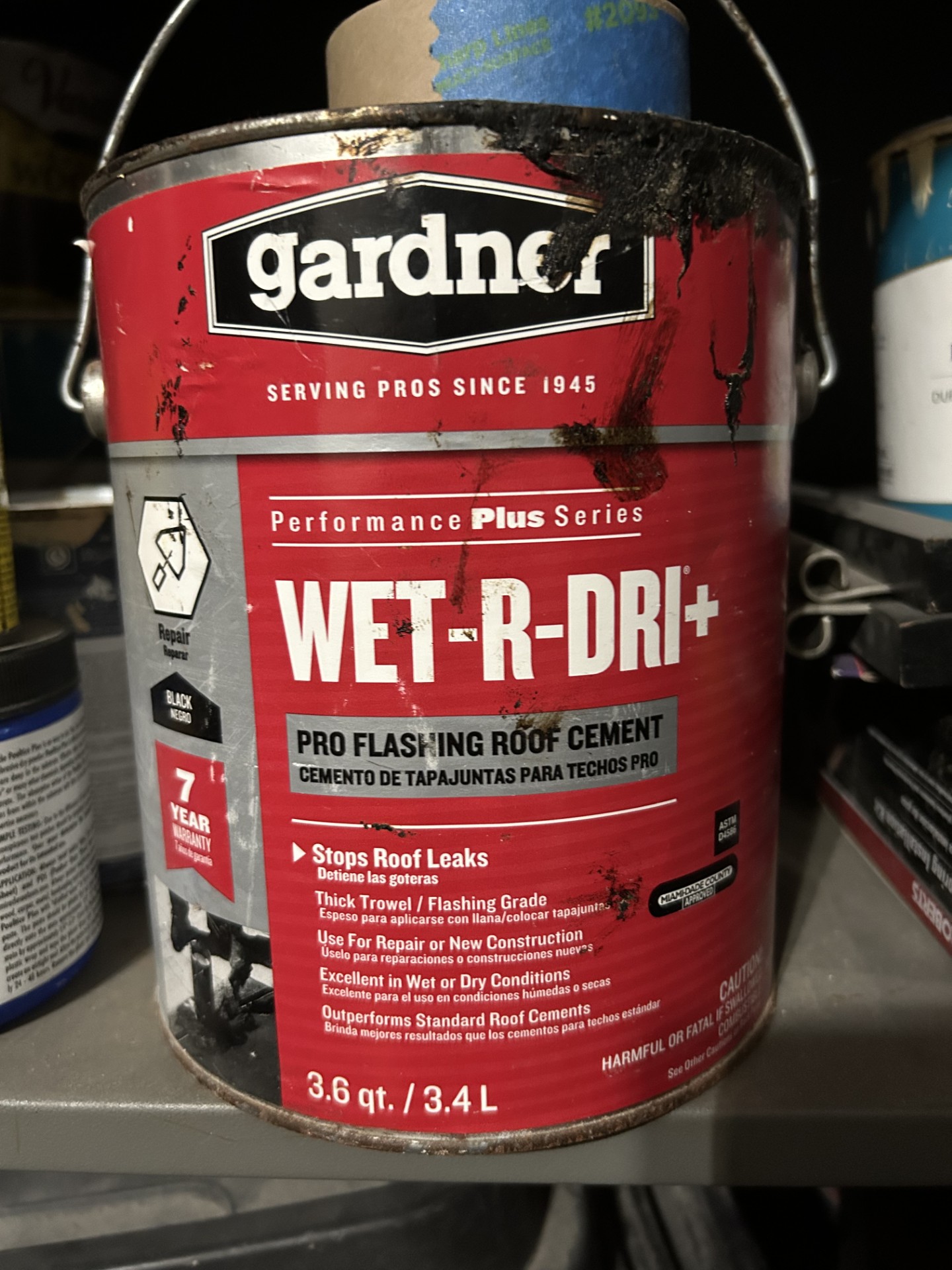
I was in the garage organizing when I came across this. It’s a leftover from my very first roof leak at one of my rental properties. I had stopped by the house to make sure everything was ready before the next tenants moved in. It was raining outside, and as I walked into the bathroom, I heard a faint sound…
Tec… tec… tec…
I looked up and saw it—a water stain on the ceiling. I remember feeling the weight of that moment. My mind immediately went to the cost of a new roof and the thought of draining every dollar I had saved. After the initial panic wore off, I did what any girl in my position would do—I called my dad.
He came out to the property and looked at the water mark. Without even getting on the roof, he claimed to know exactly what the problem was. So, we drove to Lowe’s, picked up this roofing tar, and headed back to the house.
That evening, we grabbed the ladder, and I climbed onto the roof while my dad talked me through what to do. I found the area around a vent pipe where the water was allegedly getting in and covered it with the roofing tar. Eventually, I had to replace the roof completely, but that little patch bought me about six years of time.
And that taught me an important lesson:
Just because a roof leaks, doesn’t necessarily mean the entire roof has failed.
Sometimes the problem is localized—deterioration around a vent pipe, flashing, or the valleys of the roof. Of course, the cause needs to be properly evaluated, but a leak doesn’t automatically mean you need an entirely new roof.
And for the record, I definitely do NOT recommend climbing onto a roof while it’s raining. 😂 Sometimes, though, you do what you have to do.
Afterward, my dad gave me a full lecture on how roofs and houses are constructed. Looking back, it wasn’t just a repair. It was another lesson on caring for my properties.
Years later, I took a job defending property damage cases. I had the opportunity to work with civil engineers who inspected properties and determined causation for all kinds of claims—including roof claims. I found myself climbing roofs with engineers, inspecting damage, and learning firsthand what was actually happening above those ceilings.
I also had the opportunity to see how homeowners sometimes jeopardized their insurance coverage without realizing it.
#1 — WAITING TO REPORT THE DAMAGE.
#2 — FAILING TO PROTECT THE PROPERTY FROM FURTHER DAMAGE.
If you discover a roof leak, waiting too long to notify your insurance carrier could potentially create a late-notice issue. And if you allow water to continue entering the home and causing additional damage without taking reasonable steps to protect the property, you could potentially face coverage issues for the resulting damage.
Even if you can’t afford a full roof replacement—or even a permanent repair—take reasonable steps to prevent further damage, that could include having the roof properly tarped or taking other temporary protective measures. Allowing water to continue seeping in can result in mold and other damages, making the tab for repairs much higher.
Some (not all) insurance carriers may handle or reimburse certain initial mitigation expenses, which may get through that initial hurdle of protecting the property from further damage. And while the cost of replacing an old or deteriorated roof may not necessarily be covered, ensuing interior water damage may be covered depending on the cause, policy language, and circumstances.
The important thing is:
Don’t ignore the leak. Don’t assume the entire roof has failed. And don’t let the damage continue to get worse.
Document what you see. Take photos and videos. Take reasonable steps to protect the property. And notify your insurance carrier promptly when appropriate.
That little container of roofing cement sitting in my garage all these years later reminds me of something much bigger than a roof leak. It reminds me that every problem is an opportunity to learn—and sometimes, the lessons you learn while protecting one investment end up protecting many more.